Conversational AI
AI for Customer Service: How to Reduce Response Time by 80%
Slow customer service kills loyalty. Learn how AI-powered chatbots, smart routing, and sentiment analysis can cut your response time by 80% while improving satisfaction.
By Axonix Labs · · 13 min read
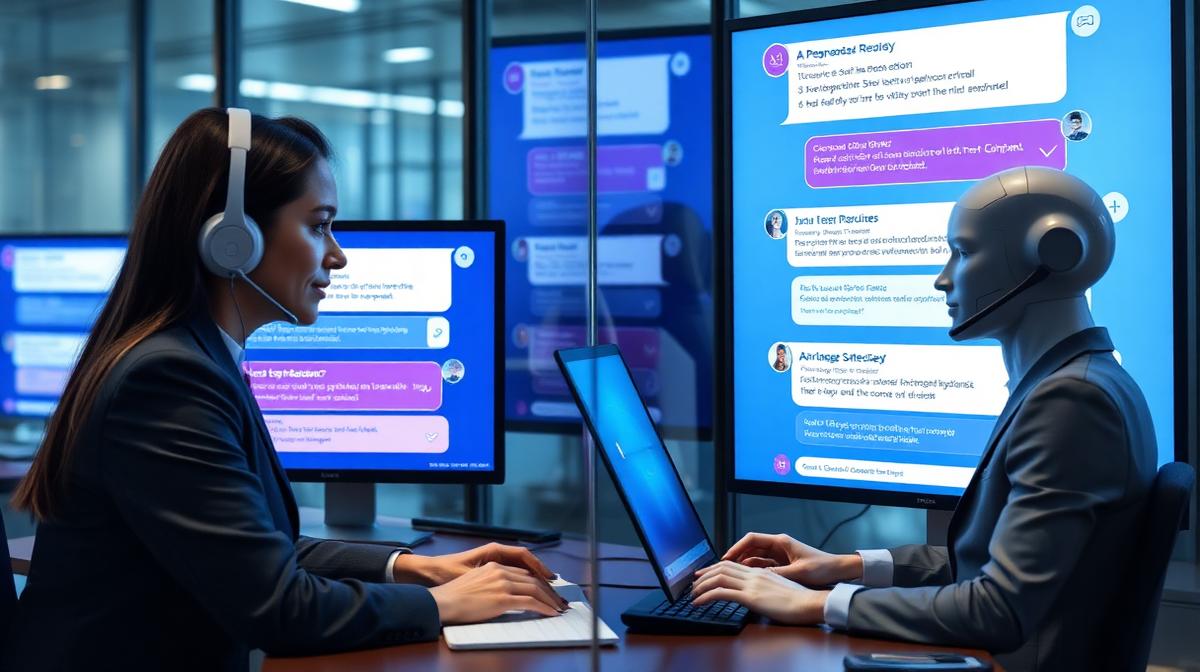
Every minute a customer waits for a response, the probability of losing them increases. Research consistently shows that response time is the single biggest factor in customer satisfaction — more important than the quality of the response itself. If you are slow, it does not matter how good your answer is.
The good news is that AI has made it possible to dramatically reduce response times without proportionally increasing headcount. At Axonix Labs, we have helped businesses cut their average customer service response time by 80 percent or more using a combination of intelligent chatbots, smart ticket routing, and real-time sentiment analysis.
This guide explains exactly how it works and how you can implement it in your business.
The Response Time Crisis
Let us start with the numbers:
- 60 percent of customers define "good" customer service as getting a response within 10 minutes
- The average email response time for businesses is over 12 hours
- 79 percent of customers who complain on social media expect a response within one hour
- Companies that respond within 5 minutes are 100x more likely to qualify a lead than those who respond after 30 minutes
These expectations are only increasing. Customers today compare your response time not against your competitors, but against the best experience they have had with any company. If Amazon responds in seconds, your 24-hour email reply feels like a failure.
Speed is the new quality in customer service. Customers would rather get a fast, good answer than wait for a perfect one that arrives too late.
The Three AI Pillars of Fast Customer Service
At Axonix Labs, we approach customer service AI as three interconnected capabilities:
Pillar 1: AI-Powered Chatbots and Virtual Assistants
Modern conversational AI has moved far beyond the simple rule-based chatbots of five years ago. Today's AI assistants can:
- Understand natural language queries, including slang, typos, and context
- Handle multi-turn conversations that require memory and reasoning
- Access your knowledge base, FAQs, product information, and order systems in real time
- Escalate to human agents with full conversation context when needed
- Learn from every interaction to improve over time
*What This Means in Practice:*
A customer visits your website at 2 AM with a question about their order status. Instead of seeing "Our office hours are 9-5," they interact with an AI assistant that:
1. Identifies them from their email or order number 2. Retrieves their order details from your system 3. Provides a clear, accurate status update 4. Asks if there is anything else they need 5. Resolves the issue in under 60 seconds — no human required
For routine enquiries — which typically make up 60-80 percent of all customer contacts — this is transformative. Response time drops from hours to seconds.
Pillar 2: Intelligent Ticket Routing
Not every customer issue can be handled by a chatbot. Complex problems, emotional customers, and technical issues often need a human touch. The question is: which human?
AI-powered ticket routing analyses incoming messages and automatically:
- *Categorises* the issue (billing, technical, shipping, complaint, etc.)
- *Assesses urgency* based on language, sentiment, and customer history
- *Routes to the right agent* based on expertise, availability, and workload
- *Prioritises* high-value customers or critical issues
Without AI routing, a customer with an urgent billing problem might wait in the same queue as someone asking a general FAQ question. With AI routing, urgent issues reach the right specialist immediately.
Smart routing does not replace your team. It amplifies them by ensuring every agent handles the issues they are best equipped to resolve, with the context they need to do it quickly.
Pillar 3: Real-Time Sentiment Analysis
Sentiment analysis uses natural language processing to detect the emotional tone of customer messages in real time. This enables:
- *Escalation Triggers* — Automatically flag conversations where the customer is becoming frustrated or angry
- *Priority Adjustment* — Move upset customers to the front of the queue
- *Agent Coaching* — Alert agents when their tone may be causing a negative reaction
- *Trend Detection* — Identify emerging issues before they become crises (e.g., a product defect causing a spike in complaints)
Sentiment analysis turns your customer service operation from reactive to proactive. Instead of waiting for a customer to escalate, you detect dissatisfaction early and intervene before it becomes a complaint.
Implementation: A Step-by-Step Approach
Here is how Axonix Labs typically implements AI for customer service:
*Week 1-2: Audit and Analysis*
- Volume and types of customer enquiries
- Current response times and resolution rates
- Most common questions and issues
- Existing tools and systems
- Team structure and capabilities
*Week 3-4: Design and Configuration*
- Configure the chatbot with your knowledge base and FAQs
- Set up ticket routing rules and escalation paths
- Define sentiment thresholds and alerts
- Integrate with your CRM, helpdesk, and communication channels
*Week 5-8: Pilot and Optimisation*
- Start with a subset of channels or customer segments
- Monitor performance closely and fine-tune
- Train your team on the new workflows
- Gather feedback from agents and customers
*Week 9-12: Full Deployment and Scaling*
- Roll out across all channels
- Implement advanced features like proactive outreach
- Set up ongoing monitoring and reporting
- Establish a continuous improvement process
This follows our Axonix Method — designed to deliver measurable results within 90 days.
The Numbers: What 80% Faster Looks Like
Let us make this concrete with a typical scenario:
- Average first response time: 4 hours
- Average resolution time: 18 hours
- Enquiries handled per agent per day: 35
- Customer satisfaction score: 72%
- Average first response time: 45 seconds (chatbot) / 12 minutes (routed to agent)
- Average resolution time: 3.5 hours
- Enquiries handled per agent per day: 55 (AI handles routine queries)
- Customer satisfaction score: 89%
The response time improvement is not 80 percent across the board — it is 80 percent or more for the routine queries that AI handles directly. For complex issues routed to agents, the improvement is typically 40-60 percent because agents have more time and better context.
What About the Human Touch?
A common concern is that AI will make customer service feel impersonal. The opposite is actually true when implemented well:
- AI handles the repetitive, transaction enquiries — freeing agents for meaningful conversations
- Agents receive full context from the AI, so customers never have to repeat themselves
- Sentiment analysis helps agents calibrate their tone and approach
- Response times drop dramatically, which is the number one driver of customer satisfaction
The best customer service AI does not replace human empathy. It removes the obstacles that prevent your team from being empathetic — time pressure, lack of context, and information overload.
Learn more about how AI transforms the entire customer experience journey.
Choosing the Right AI Customer Service Solution
When evaluating options, consider:
- *Integration* — Does it connect to your existing helpdesk, CRM, and communication channels?
- *Language Support* — Can it handle the languages your customers use?
- *Customisation* — Can it be tailored to your brand voice and specific products?
- *Analytics* — Does it provide actionable insights, not just raw data?
- *Scalability* — Can it handle traffic spikes without degradation?
- *Compliance* — Does it meet data privacy requirements in your markets?
For businesses in Southeast Asia, language and cultural nuance are particularly important. Axonix Labs builds solutions that understand the multilingual, multicultural reality of the region. Discover why Southeast Asian businesses trust Axonix Labs.
Common Mistakes to Avoid
- *Deploying a chatbot without a proper knowledge base* — The bot is only as good as the information it has access to
- *Not providing an easy escalation path* — Customers must always be able to reach a human when needed
- *Ignoring agent feedback* — Your team knows what works and what does not
- *Over-automating* — Some interactions should always be handled by humans (complaints, sensitive issues)
- *Not measuring impact* — Use [ROI measurement frameworks](/blog/measuring-ai-roi-axonix-labs-framework) to track the real business impact
Getting Started with Axonix Labs
If your customer service response time is costing you customers, revenue, or reputation, AI can help — and the results can come faster than you expect.
At Axonix Labs, we specialise in building AI automation solutions that deliver measurable improvements. Our approach is practical, results-focused, and tailored to your specific business needs.
Explore how to implement AI in your business without a data team, learn what an AI consultant actually does, or see real-world Axonix AI use cases.
Contact Axonix Labs to discuss how we can help you reduce response time and improve customer satisfaction.