AI Solutions
Enterprise AI Integration: Connecting AI to Your Business Systems
The value of AI isn't in the model. It's in the integration. Learn how to seamlessly connect AI capabilities with your existing enterprise systems for maximum impact.
By Axonix Labs · · 13 min read
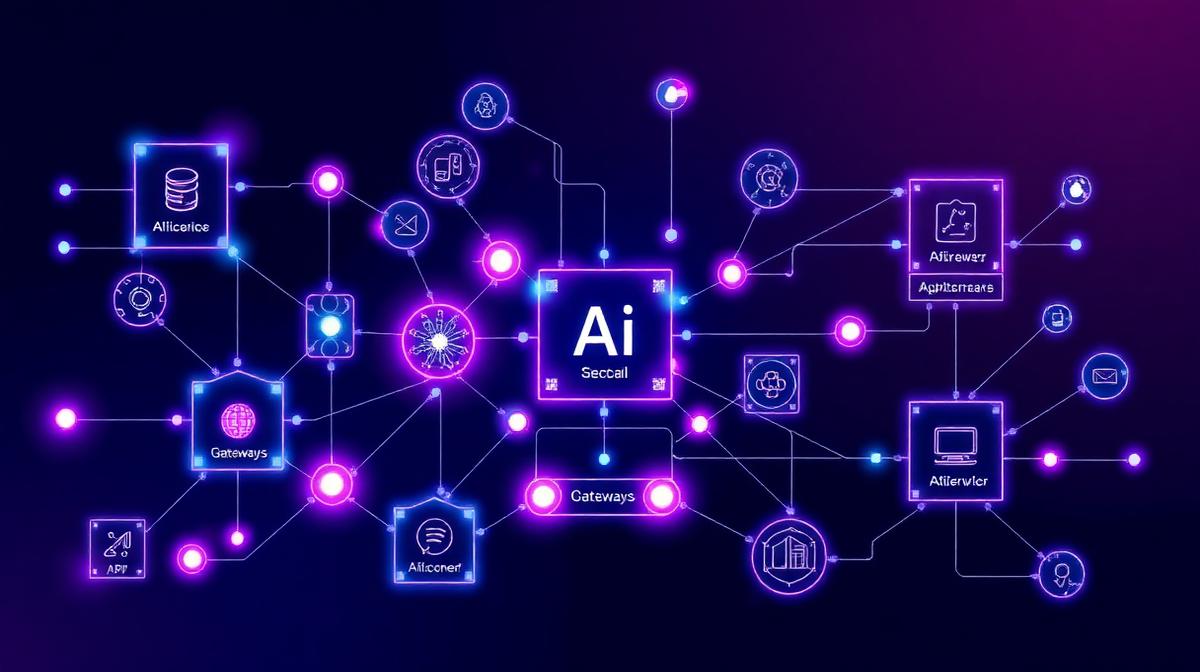
Here's a pattern we see repeatedly at Axonix Labs: a company builds an impressive AI model that achieves excellent performance in testing, then struggles for months to integrate it into their actual business systems. The model sits in a notebook or a demo environment, generating excitement but zero business value.
The integration challenge is the single biggest bottleneck in enterprise AI adoption. And it's primarily an engineering problem, not a data science one.
Why AI Integration Is Hard
Enterprise IT environments are complex ecosystems of legacy systems, cloud services, databases, APIs, and custom applications built over decades. Integrating AI into this landscape presents unique challenges:
AI models aren't just another API. They have unique requirements around data preprocessing, feature computation, latency constraints, error handling, and continuous monitoring that traditional integration patterns don't address.
- Data pipeline complexity: AI models need clean, transformed data in specific formats, often combining data from multiple source systems in real time
- Latency requirements: Some AI use cases (fraud detection, real-time personalisation) require sub-100ms response times, creating strict infrastructure constraints
- Error handling: Unlike deterministic APIs, AI models can produce unexpected outputs, confidence levels vary, and graceful degradation strategies are essential
- Version management: Models are retrained regularly, and the integration layer must support seamless model updates without downtime
- Compliance and audit: Regulated industries require complete traceability of AI-influenced decisions, adding logging and governance requirements
Integration Architecture Patterns
Through hundreds of enterprise AI deployments, several proven integration patterns have emerged:
Pattern 1 — API Gateway Integration: Wrap AI models behind RESTful or gRPC APIs with standardised request/response contracts. This is the most common pattern and works well for synchronous, request-response use cases.
- Best for: Real-time scoring, recommendations, classifications
- Considerations: Latency management, rate limiting, authentication, caching strategies
- Example: A CRM system calling an AI scoring API to prioritise leads in real time
Pattern 2 — Event-Driven Integration: AI models subscribe to event streams (Kafka, Pub/Sub) and process data asynchronously, publishing results back to downstream systems.
- Best for: High-volume processing, complex workflows, loose coupling
- Considerations: Event ordering, exactly-once processing, dead letter queues
- Example: Processing customer interactions from multiple channels for sentiment analysis and routing
Pattern 3 — Embedded Integration: AI models are embedded directly into existing applications, either as libraries or as sidecar containers.
- Best for: Edge computing, offline scenarios, ultra-low latency requirements
- Considerations: Model size constraints, update mechanisms, resource management
- Example: On-device quality inspection models in manufacturing environments
Pattern 4 — Batch Integration: AI models process data in scheduled batches, writing results to databases or data warehouses for consumption by downstream systems.
- Best for: Non-time-sensitive predictions, large-scale scoring, periodic forecasting
- Considerations: Data freshness, processing windows, failure recovery
- Example: Nightly churn risk scoring for the entire customer base
The right integration pattern depends on your latency requirements, data volumes, existing architecture, and operational capabilities. Most enterprises end up using a combination of patterns across different AI use cases.
The Integration Layer: What You Need
A robust AI integration layer includes several critical components:
- Feature Store: A centralised system for computing, storing, and serving the features (input variables) that AI models need. This ensures consistency between training and production environments.
- Model Registry: Version control for trained models, tracking lineage, performance metrics, and deployment status.
- Inference Service: Scalable infrastructure for running model predictions, with auto-scaling, health checks, and circuit breakers.
- Monitoring Dashboard: Real-time visibility into model performance, data quality, latency, and error rates. [Read more about monitoring in our MLOps guide](/blog/mlops-best-practices-production-ai).
- Orchestration Layer: Workflow management for complex AI pipelines that involve multiple models, business rules, and human-in-the-loop decision points.
Security and Compliance in AI Integration
Enterprise AI integration must address security and compliance from day one:
- Data encryption in transit and at rest for all AI data pipelines
- Role-based access control for model endpoints and training data
- Audit logging of all AI-influenced decisions with full input/output traceability
- Data residency compliance ensuring data stays within required jurisdictions
- Model explainability APIs that can provide reasoning for individual predictions on demand
In regulated industries like financial services and healthcare, the integration layer often requires more engineering effort than the AI model itself. Compliance isn't optional, and retrofitting it later is exponentially more expensive.
Common Integration Pitfalls
Avoid these mistakes that we've seen derail enterprise AI projects:
- Building custom infrastructure instead of using proven platforms and frameworks
- Ignoring data preprocessing at the integration layer (training-serving skew is the #1 cause of production AI failures)
- Treating AI integration as a one-time project rather than an ongoing capability
- Underestimating the change management required for teams that consume AI outputs
- Failing to build feedback loops that capture real-world performance back to the data science team
Getting Enterprise AI Integration Right
Successful AI integration requires a cross-functional team spanning data science, software engineering, DevOps, security, and business stakeholders. It's not a data science project or an engineering project. It's both.
At Axonix Labs, our AI integration services cover the full lifecycle: from architecture design and data pipeline engineering through to production deployment, monitoring, and continuous improvement. We specialise in connecting AI capabilities with existing enterprise systems to deliver measurable business outcomes. See also how Axonix AI brings intelligence to the edge, our lessons on scaling AI from pilot to enterprise, and how Axonix Labs builds AI systems that last. Explore our solutions or contact us to discuss your integration challenges.