AI Development
How to Build an AI-Powered Product from Scratch: The Complete Guide by Axonix Labs
Building an AI product is not the same as building traditional software. Axonix Labs shares the complete product development lifecycle — from problem definition to production-grade AI that scales.
By Axonix Labs · · 14 min read
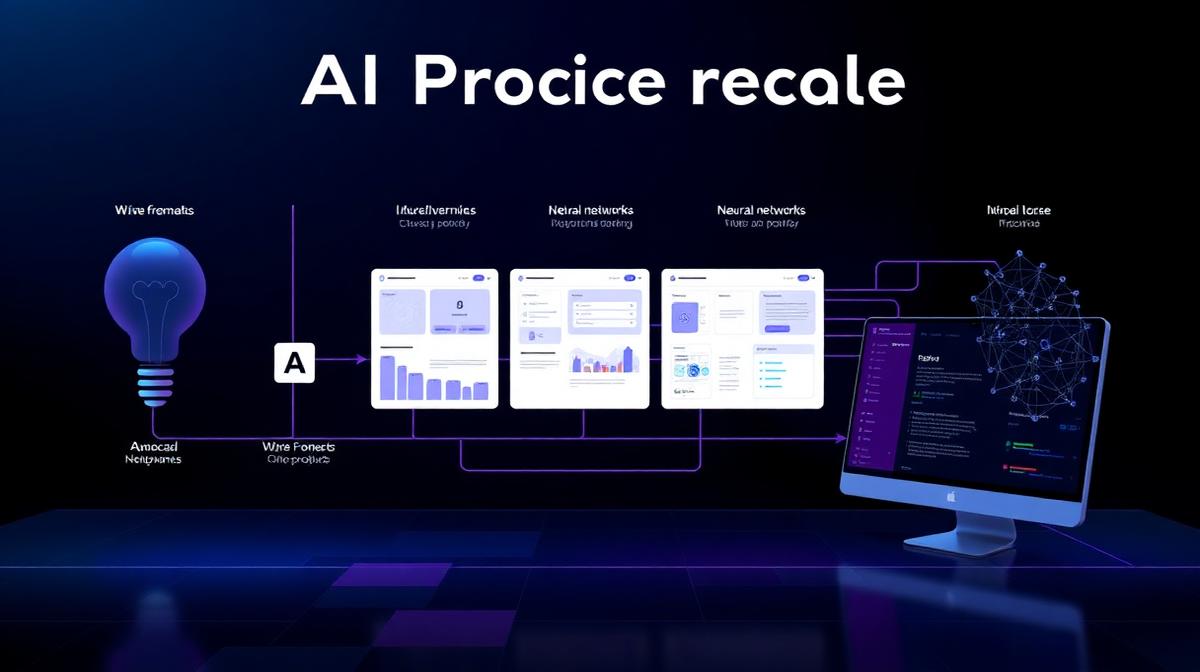
Every company wants to build AI into their products now. The potential is obvious: smarter features, personalised experiences, automated decisions, and competitive differentiation that is difficult to replicate. But the gap between wanting an AI-powered product and actually shipping one is enormous.
At Axonix Labs, we have helped organisations across industries turn AI ideas into production-grade products. This guide distils what we have learned about what works, what fails, and how to navigate the unique challenges of AI product development.
AI Product Development Is Fundamentally Different
The first thing to understand is that building an AI-powered product is not the same as adding a feature to traditional software. Traditional software is deterministic — you write rules, and the system follows them exactly. AI systems are probabilistic — they make predictions based on patterns in data, and those predictions are never 100 percent accurate.
The biggest mistake teams make when building AI products is treating model development like feature development. AI requires experimentation, iteration, and tolerance for uncertainty that traditional product management is not designed for.
This fundamental difference affects every aspect of the product lifecycle:
- Requirements cannot be fully specified upfront — you discover what is possible through experimentation
- Timelines are less predictable — model performance depends on data quality and problem difficulty
- Testing is probabilistic — you measure accuracy rates, not pass/fail test cases
- Maintenance is continuous — models degrade as the world changes, requiring ongoing retraining
- User expectations must be managed — AI will sometimes be wrong, and your product must handle that gracefully
Step 1: Define the Problem, Not the Technology
The most successful AI products start with a clear, specific business problem — not a desire to "use AI." Before writing a single line of code, answer these questions:
- What decision or task are you trying to improve?
- Who benefits from this improvement, and how much?
- What does the current process look like without AI?
- What data is available to train and operate the AI?
- What level of accuracy is needed for the product to be useful?
- What happens when the AI is wrong?
At Axonix Labs, we spend more time on problem definition than any other phase. A well-defined problem is half solved. A poorly defined one wastes months of engineering effort.
Step 2: Validate the Data
Data is the foundation of every AI product. Before committing to a full development effort, you need to understand whether your data can support the AI capability you envision.
Key data validation questions:
- Do you have enough labelled examples to train a model? (This varies hugely by problem type)
- Is the data representative of real-world conditions? (Training on biased data produces biased results)
- How fresh does the data need to be? (Some problems require real-time data; others work fine with monthly updates)
- Are there privacy, regulatory, or ethical constraints on data usage?
- Can you create a reliable data pipeline that feeds the model in production?
Many AI product initiatives fail at this stage — not because the idea is bad, but because the data is insufficient. At Axonix Labs, our AI readiness assessment catches these issues early, saving months of wasted effort.
Step 3: Build a Minimum Viable Model (MVM)
Before building a minimum viable product, build a minimum viable model. This is a quick experiment — typically two to four weeks — to determine whether AI can solve your problem at an acceptable level of accuracy.
The MVM phase answers the most critical question: is this problem solvable with the available data and current AI techniques?
- Use a simple baseline model first (often surprisingly effective)
- Test on a representative holdout dataset
- Define clear success criteria before you start
- Document what works, what does not, and what you learned
The MVM phase is the highest-leverage investment in the entire product lifecycle. A few weeks of focused experimentation can save you from a year-long project that was never going to work.
Step 4: Design the Product Around the AI's Strengths and Weaknesses
Once you know what the AI can and cannot do, design the product experience accordingly. This is where many AI products fail — they present AI predictions as if they were facts, then lose user trust when the predictions are wrong.
Great AI product design principles:
- **Communicate confidence**: Show users how confident the AI is in its predictions. A 95 percent confidence recommendation can be presented differently from a 60 percent one.
- **Enable human override**: Always let users correct or override AI decisions. This maintains trust and generates valuable training data.
- **Fail gracefully**: Design explicit fallback experiences for when the AI cannot make a confident prediction.
- **Be transparent**: Help users understand why the AI made a particular recommendation. Explainability builds trust.
- **Start assistive, not autonomous**: Begin with AI that assists human decisions before moving to AI that makes decisions independently.
Step 5: Build Production-Grade Infrastructure
The leap from a working model in a notebook to a production AI system is enormous. Production AI requires:
- **Model serving infrastructure**: APIs that can handle your expected request volume with acceptable latency
- **Data pipelines**: Reliable, monitored pipelines that feed fresh data to the model
- **Model monitoring**: Systems that track model performance, detect drift, and alert when accuracy degrades
- **Retraining pipelines**: Automated or semi-automated workflows for updating models with new data
- **A/B testing infrastructure**: The ability to test new model versions against production baselines
- **Logging and observability**: Comprehensive logging for debugging, compliance, and continuous improvement
This is where MLOps expertise becomes critical. At Axonix Labs, our engineering team builds production AI systems designed for reliability and maintainability from day one.
Step 6: Launch, Measure, and Iterate
Launching an AI product is not the finish line — it is the starting line. AI products improve with use because every user interaction generates data that can improve the model.
Post-launch priorities:
- Monitor real-world accuracy against your success criteria
- Collect user feedback (explicit and implicit) for model improvement
- Track business metrics — is the AI actually delivering the value you projected?
- Schedule regular model retraining cycles
- Plan for model versioning and rollback capability
Common Pitfalls Axonix Labs Helps You Avoid
Having guided dozens of AI product launches, we have seen the same mistakes repeatedly:
- **Starting with technology, not problems**: "Let us use GPT for something" is not a product strategy
- **Underestimating data requirements**: The model is only as good as the data it trains on
- **Skipping the MVM phase**: Committing to a full build before validating feasibility
- **Ignoring edge cases**: AI products must handle the unusual cases gracefully, not just the common ones
- **Neglecting MLOps**: A model that works in a notebook but cannot be maintained in production is worthless
- **Over-automating too soon**: Removing human oversight before the AI has proven itself
Why Partner with Axonix Labs
Building an AI-powered product requires a rare combination of AI engineering depth, product thinking, and production systems expertise. At Axonix Labs, we bring all three — plus the business acumen to ensure your AI product creates real commercial value.
Whether you are building your first AI feature or scaling an AI-native platform, we can help you navigate the complexity and ship with confidence.
Explore our end-to-end AI solutions, learn about custom AI model development at Axonix Labs, or read about why AI projects fail and how to prevent it. Contact us for a free product strategy session.