Data Analytics
Predictive Analytics: How AI Forecasting Transforms Business Decisions
From demand forecasting to customer churn prediction, predictive analytics powered by machine learning is giving businesses an unprecedented ability to see what's coming next.
By Axonix Labs · · 12 min read
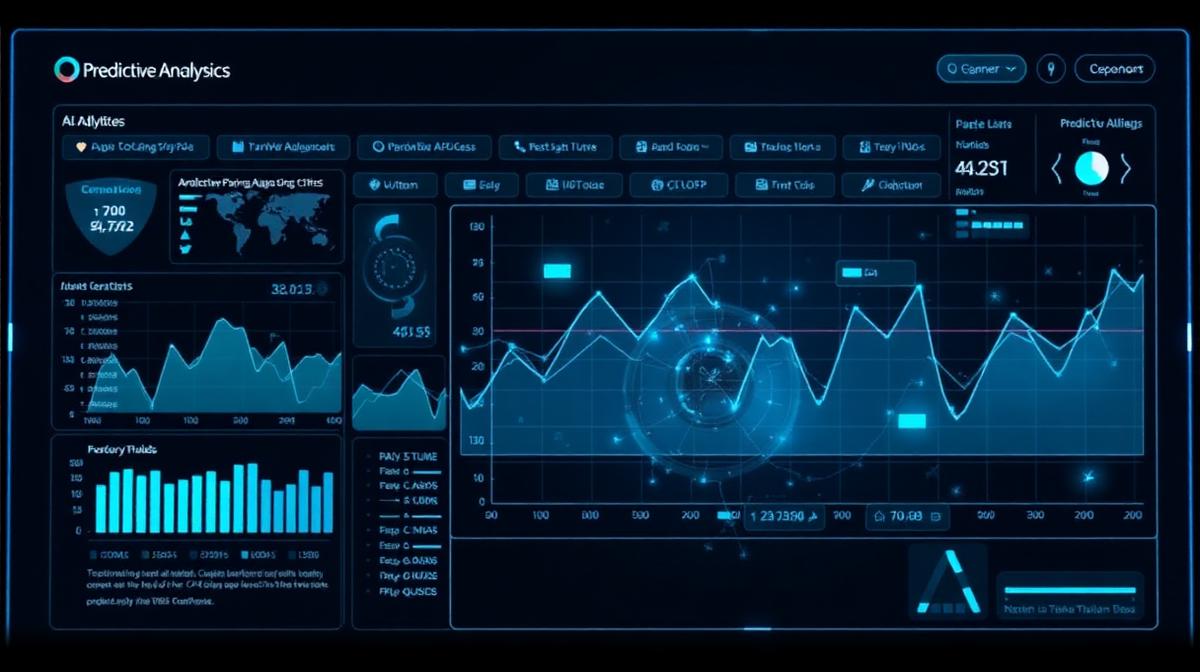
In business, timing is everything. The company that anticipates a market shift, predicts customer behaviour, or forecasts demand accurately doesn't just react faster. It shapes outcomes proactively. This is the promise of predictive analytics, and AI has made it a reality.
What Is Predictive Analytics?
Predictive analytics uses statistical algorithms and machine learning models to identify the likelihood of future outcomes based on historical data. Unlike traditional reporting that tells you what happened, predictive analytics tells you what will happen, and increasingly, what you should do about it.
The global predictive analytics market is projected to reach $41.5 billion by 2028, growing at 24.5% CAGR. This explosive growth reflects a simple truth: companies that can predict the future outperform those that can't.
Core Use Cases Driving Business Value
The most impactful applications of predictive analytics span every industry and function:
- Demand Forecasting: Retail and manufacturing companies use ML models to predict product demand with 30-40% greater accuracy than traditional methods. This reduces inventory costs, minimises stockouts, and optimises supply chain operations.
- Customer Churn Prediction: Telecom, SaaS, and financial services companies identify at-risk customers 60-90 days before they leave, enabling targeted retention campaigns that reduce churn by 15-25%.
- Predictive Maintenance: Industrial and manufacturing organisations predict equipment failures before they occur, reducing unplanned downtime by up to 50% and maintenance costs by 25-30%.
- Financial Forecasting: AI models that incorporate hundreds of variables, including macroeconomic indicators, market sentiment, and competitive dynamics, produce revenue and cash flow forecasts with significantly tighter confidence intervals.
- Risk Scoring: Insurance, lending, and healthcare organisations use predictive models to assess risk more accurately, improving underwriting decisions and reducing losses.
Building Effective Predictive Models
The quality of predictive analytics depends entirely on the rigour of the modelling process. At Axonix Labs, we follow a structured approach:
A predictive model is only as good as the data it's trained on and the problem it's designed to solve. The most common failure mode is building a technically sophisticated model that answers the wrong business question.
Step 1 — Problem Framing: Define exactly what you're predicting, why it matters, and how the prediction will be used in decision-making. A churn model that predicts 30-day churn is very different from one that predicts 12-month churn.
Step 2 — Feature Engineering: Transform raw data into meaningful features that capture the signals relevant to your prediction. This is where domain expertise meets data science, and it's often the biggest determinant of model performance.
Step 3 — Model Selection and Training: Choose the right algorithm for your problem type, data volume, and interpretability requirements. Gradient boosting methods (XGBoost, LightGBM) dominate tabular prediction tasks, while deep learning excels with unstructured data like text and images.
Step 4 — Validation and Testing: Rigorously test model performance on held-out data that reflects real-world conditions. Pay special attention to performance across different segments, time periods, and edge cases.
Step 5 — Deployment and Monitoring: Deploy the model into production with real-time monitoring for data drift and performance degradation. Learn about our MLOps practices.
From Prediction to Prescription
The next evolution beyond predictive analytics is prescriptive analytics: not just telling you what will happen, but recommending the optimal action to take.
- Predictive: "This customer has a 78% probability of churning in the next 30 days."
- Prescriptive: "Offering this customer a 15% discount on their renewal will reduce churn probability to 23%, with an expected ROI of 340%."
Prescriptive analytics closes the gap between insight and action. It transforms data from something people look at into something that directly drives decisions, often automatically.
Real-Time Predictive Analytics
Batch predictions that run overnight are giving way to real-time predictive systems that make decisions in milliseconds:
- E-commerce platforms predicting purchase intent and personalising product recommendations as customers browse
- Fraud detection systems scoring every transaction in real time and blocking suspicious activity before it completes
- Dynamic pricing engines adjusting prices based on real-time demand, inventory levels, and competitive positioning
- Healthcare systems predicting patient deterioration and alerting clinical teams within seconds
Building real-time predictive infrastructure requires specialised engineering expertise, including streaming data pipelines, low-latency model serving, and robust fallback mechanisms for when models are unavailable.
Getting Started with Predictive Analytics
You don't need petabytes of data or a team of PhD data scientists to benefit from predictive analytics. Start with:
- A clearly defined business problem where better predictions would drive measurable value
- At least 12-18 months of historical data relevant to the prediction task
- A willingness to act on the predictions (the model is useless if decisions don't change)
At Axonix Labs, we help organisations identify their highest-value prediction opportunities, build production-grade predictive models, and integrate them into existing business workflows. See how Axonix AI applies predictive analytics across industries. Explore our data analytics solutions or get in touch to explore how predictive analytics can transform your decision-making.